
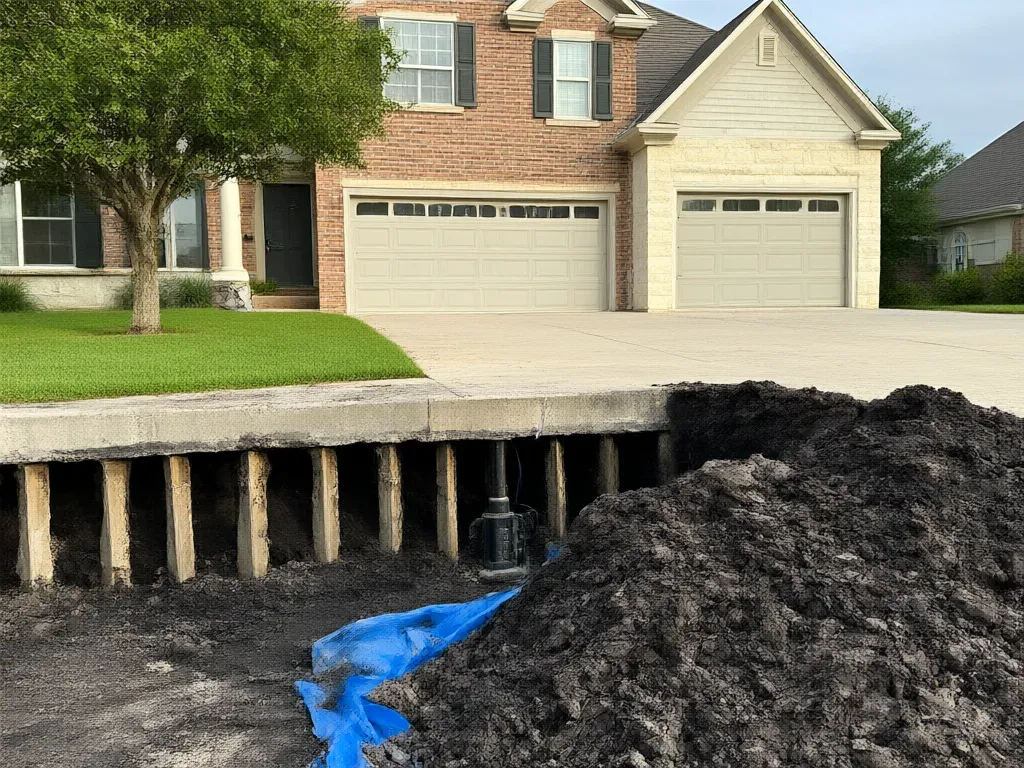
Slab Foundation Repair in Frisco, TX
Frisco Superior Foundation Repair offers professional slab foundation repair in Frisco, TX with 20 years of experience and 3,400+ foundations repaired. We lift and stabilize slab-on-grade houses on pressed concrete pilings, drilled bell-bottom piers and steel push piers, on conventional rebar slabs and post-tension slabs alike. Every slab pier job includes an independent engineer's letter before and after the lift.
Slab repair here usually means one side of the house dropped as the clay under it dried out, or one area heaved up from water. We find out which with a manometer survey and a static drain-line test before anyone digs. Exterior pilings go beside the grade beam, interior piers go in through a tunnel or a scanned breakout, and the lift happens in stages on steel shims.
Get a FREE Estimate
Or call (469) 536-0217
Slab Foundation Repair Methods
Most slab jobs use one or two of these. The engineer's plan decides the mix, and the price on your estimate says exactly which ones and how many.
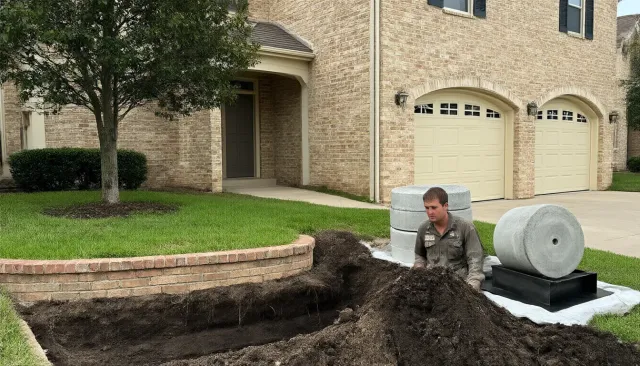
Exterior Pressed Concrete Pilings
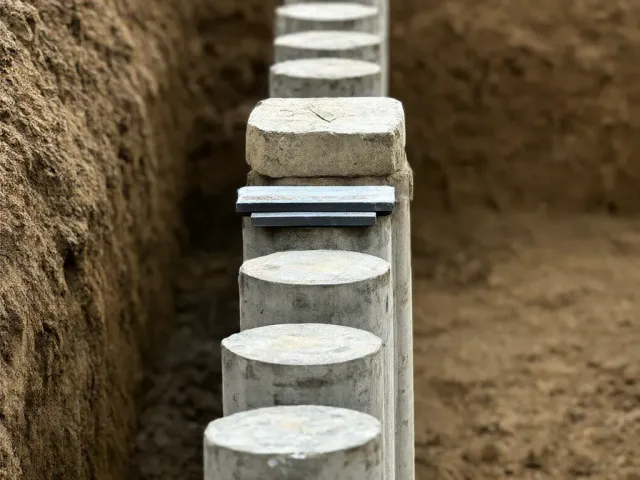
The repair we do most. We dig beside the grade beam, set 6 by 12-inch precast cylinders under it, and press them down with a hydraulic ram until the house itself stops them. Exterior pilings run $375 to $575 each, and most slab repairs need 8 to 14 of them.
Interior Slab Piers Through a Tunnel
When the low spot is in the middle of the house, the pier has to go under the floor. On post-tension slabs we usually tunnel in from outside at $160 to $240 per linear foot, so the tile and the cables stay untouched. Interior pilings run $750 to $1,100 each, access included.
Interior Slab Breakouts on Conventional Slabs
A conventional rebar slab can take a cut where a PT slab can't. We scan it anyway, saw out a section in a closet or under flooring that's coming up, set the pier and patch with new concrete doweled into the old slab. It's faster than a long tunnel when the pier sits far from an outside wall.
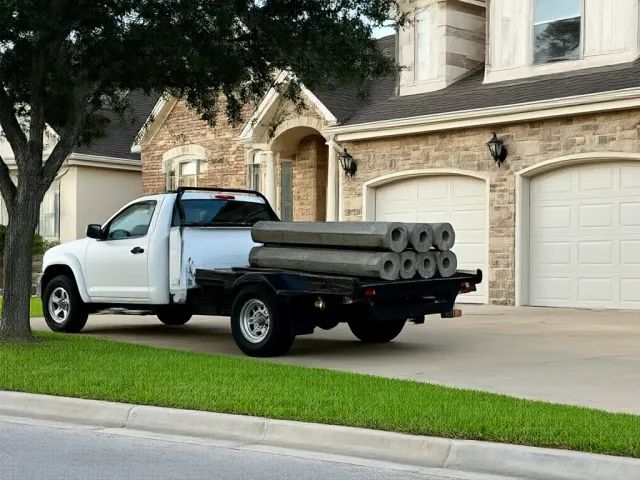
Bell-Bottom Piers Under Heavy Slab Edges
Stone fronts, two-story brick walls and big masonry fireplaces put more weight on one stretch of beam. For those the engineer may call for a drilled bell-bottom pier: a 12-inch shaft, a 24- to 30-inch bell, 10 to 15 feet deep. They run $950 to $1,450 each and need a 7 to 10 day cure before the lift.
Steel Push Piers for Slab Lifts
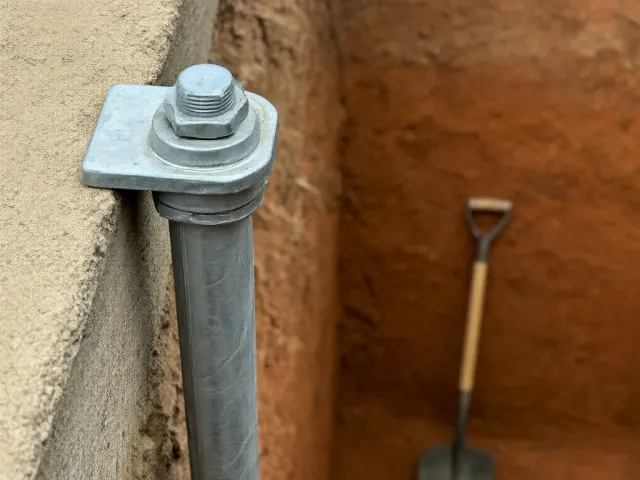
When the engineer wants a recorded number on every pier, we drive 2 7/8-inch galvanized steel tube against the weight of the house and log the drive pressure as it goes. Steel push piers run $1,300 to $2,000 each and go in fast where digging room is tight.
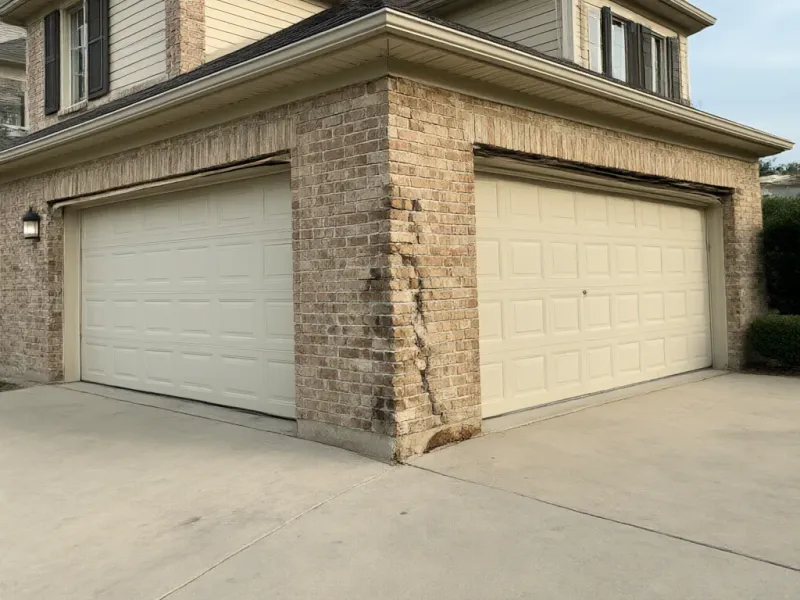
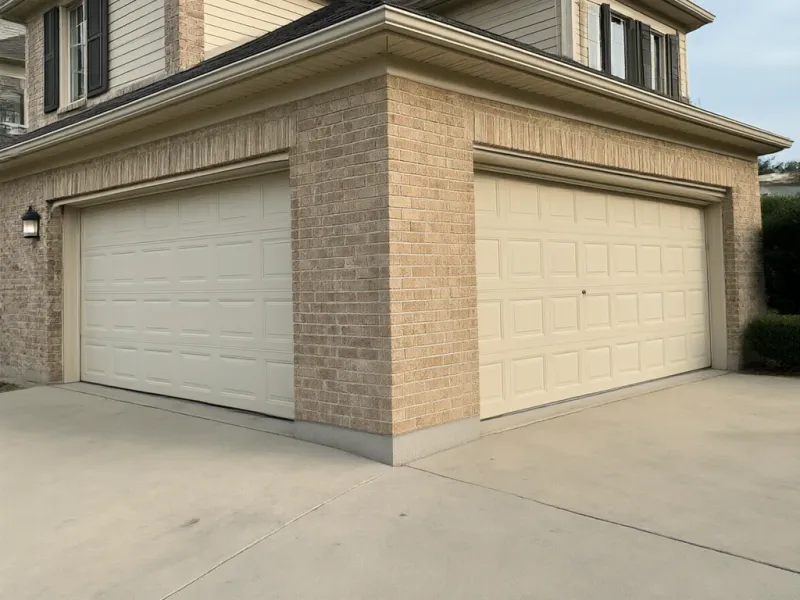
Before and After
Signs Your Slab Foundation Needs Repair
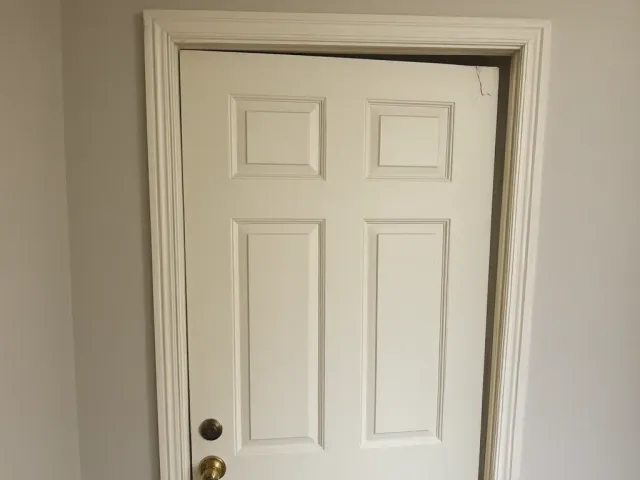
The house usually tells you before the slab does. Doors start sticking or swing open on their own. You see a wedge-shaped gap at the top corner of a door frame. Brick opens up in a stair-step crack under a window, or a crack runs through the floor tile in a straight line across two rooms.
Outside, look at the slab edge and the garage. A crack in the grade beam wider than 1/8 inch, or one where one side sits higher than the other, gets our attention. So does a gap opening between the brick and a window frame, or a garage door that no longer meets the floor evenly.
Not every crack means repair. Every slab gets hairline shrinkage cracks, and the garage floor is where you'll see most of them. Small summer cracks that close up again in the spring are the clay breathing. One crack doesn't tell us much. A pattern across the house does, and the elevation survey shows the pattern.
Post-Tension Slabs vs Conventional Slabs
A large share of the houses we repair sit on post-tension slabs. Instead of a rebar grid, they have steel tendons, half-inch strand in a plastic sheath, pulled tight after the concrete cures. That tension holds the slab together as one stiff plate, which is why PT slabs often tilt as a unit instead of cracking in the middle.
Repairing one is mostly the same as any slab from the outside. Exterior pilings go beside the grade beam and never touch a tendon. Inside is different. We scan with ground-penetrating radar before any core, cut or breakout, and we often tunnel to interior piers instead. Cut a tendon and you've got a structural problem on top of a foundation problem.
Many PT houses have a stamp or a plate in the garage warning you not to cut. Don't count on it. No stamp doesn't mean no cables, and plumbers, electricians and pool builders have all found that out the hard way. We also repair exposed tendon ends along the slab edge, where a missing grout patch lets the anchor rust.
Heave or Settlement? Why the Drain Test Comes First
Settlement is part of the slab dropping as the clay under it dries and shrinks. Heave is part of the slab rising as the clay swells. From inside the house they look alike: sticking doors, cracked tile, a floor that isn't flat. The fix is opposite. You pier settlement. You stop the water causing heave.
A leaking drain line under the slab is the most common cause of heave we find. So before any lift, we plug the main cleanout, fill the drain lines with water and watch the level for 30 minutes. If it drops, a plumber fixes the leak first and the engineer revisits the pier plan.
We've seen houses bid by another company for a full side of pilings where the pre-lift test failed in minutes. Once the line was fixed, the engineer's plan came out at less than half the piers. We test again after the lift, too, since raising a slab can stress an old joint. Both tests are in the price.
What Slab Foundation Repair Costs in Frisco
Most slab repairs we do land between $3,800 and $9,500 for 8 to 14 exterior pilings, with the engineer's letters and both drain tests included. Interior pilings add $750 to $1,100 each, and tunneling under a post-tension slab runs $160 to $240 per linear foot.
Bell-bottoms and steel piers cost more per pier, so we only use them where the engineer calls for them. You'll get the full number in writing at the inspection, before we start, and it doesn't change unless the scope does.
Our Slab Foundation Repair Process
Survey the Slab
We take 40 to 70 manometer readings across the floor, mark the high and low areas on a floor plan, and check doors, brick and the slab edge.
Static-Test the Drains
Before any lift we fill the drain lines and watch the level for 30 minutes, so we know we're fixing settlement and not a leak.
Engineer's Plan and City Permit
An independent PE sets pier locations and type within 3 to 5 business days, and we pull the permit the city requires.
Dig, Press and Lift in Stages
Crews set the piers, then lift the slab a little at a time on steel shims while we watch the manometer. Most jobs take 1 to 3 days.
Retest, Backfill and Final Letter
Drains get a second static test, then we backfill, compact and clean up. You get the engineer's final letter and a lifetime pier warranty in your name.
Slab Foundation Repair Questions
Can you repair a post-tension slab without cutting the cables?
Yes. Exterior pilings sit beside the grade beam and never touch a tendon. For interior piers we scan with ground-penetrating radar and usually tunnel under the slab instead of cutting through it.
How many piers does a slab repair need?
Most slab repairs we do take 8 to 14 exterior pilings, spaced 6 to 8 feet apart along the beam. The engineer's plan sets the count from the survey, not from a budget.
Will lifting the slab damage my plumbing?
It can stress an old joint, which is why we test the drain lines before and after every lift. If the post-lift test fails, you know right away and you know it's on our watch.
Do I need to move out during slab repair?
No. Exterior work happens outside, and tunneling stays under the house. You'll hear the ram on lift day, and we'll ask you to keep the cars out of the driveway and clear anything fragile off shelves on the low side.
Does homeowners insurance cover slab foundation repair?
Most policies exclude settlement and soil movement. Some cover damage from a sudden plumbing leak, which is one more reason the drain test matters. Ask your agent, and we'll hand you the survey and test results for the claim.
Get Your Slab Surveyed for Free
Call (469) 536-0217 and we'll have a manometer on your floor within 48 hours, with a written slab repair estimate the same day.