
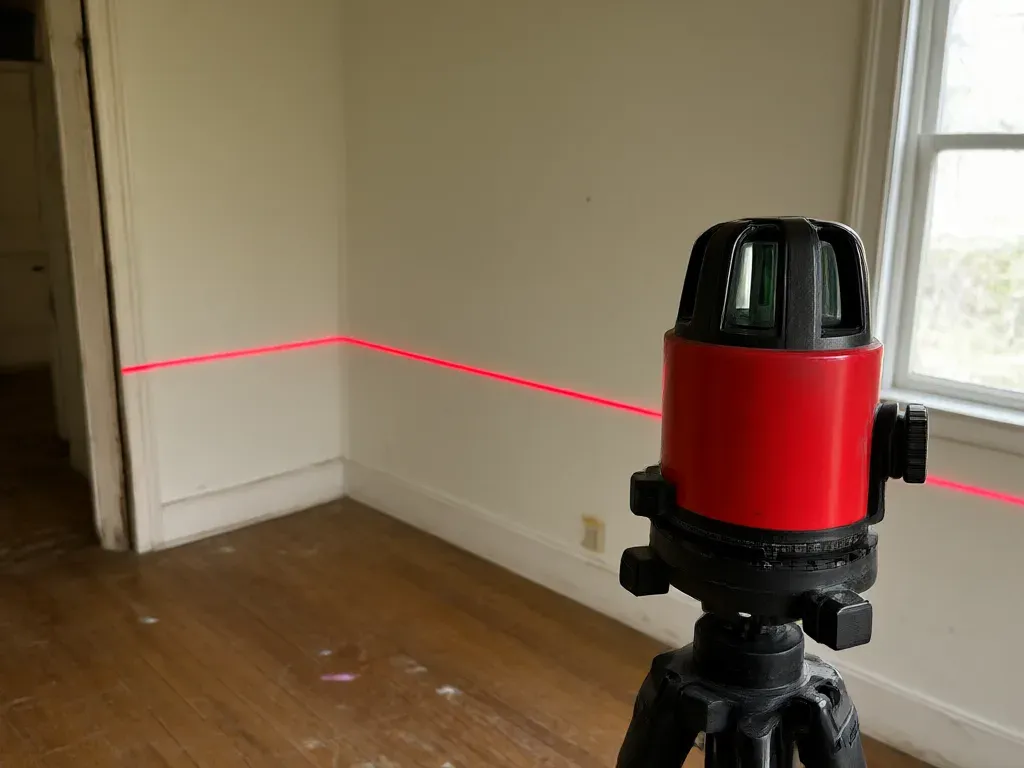
House Leveling in Frisco, TX
Frisco Superior Foundation Repair offers professional house leveling in Frisco, TX, lifting slab and pier and beam homes back toward level with pressed concrete pilings, steel shims and staged hydraulic lifts. Whole-house slab leveling on 20 to 32 pilings runs $8,500 to $19,500. We've leveled houses as part of 3,400+ foundation jobs since 2006.
House leveling is about the floor you walk on, not one corner of it. We map the whole house with 40 to 70 manometer readings, decide with the engineer what should come up and what should stay, and lift in stages so drywall, tile and plumbing can follow. The goal is the best practical level for your house, not a perfect number that cracks the kitchen.
Get a FREE Estimate
Or call (469) 536-0217
House Leveling Options
The survey decides which of these your house needs. We'll show you the readings so you can see why.
Whole-House Slab Leveling
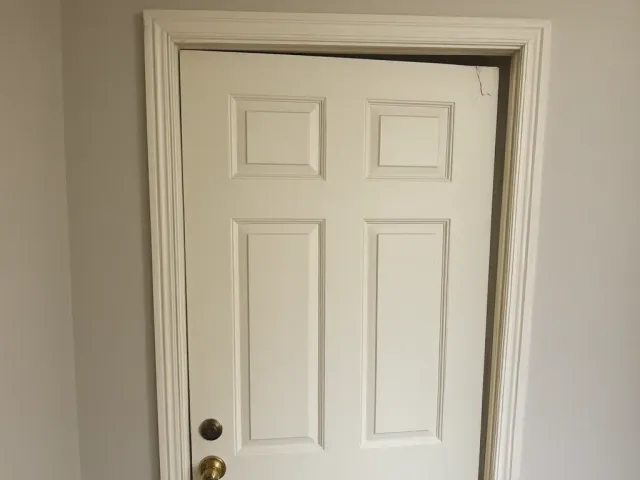
When floors slope and doors bind in rooms all over the house, we pier the full perimeter and add interior piers where the survey shows low spots. It's usually 20 to 32 pilings and $8,500 to $19,500, and it beats piering the house one corner at a time over ten years.
Partial Slab Leveling
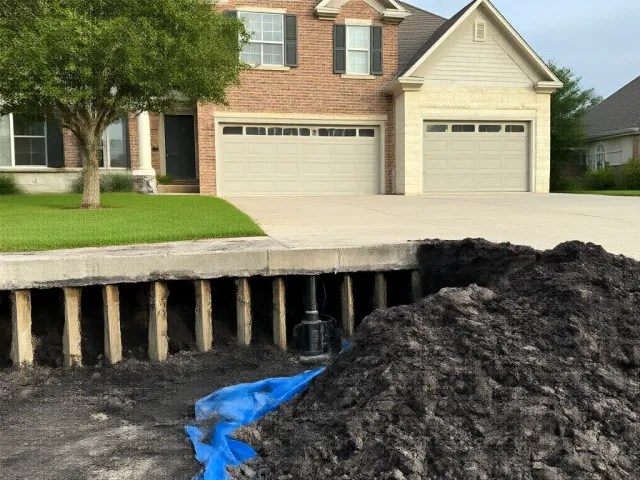
Often only one side or one wing has dropped, usually the side that dries out hardest in summer. We pier that section and lift it back toward the rest of the house. Most partial jobs take 8 to 14 exterior pilings at $3,800 to $9,500.
Pier and Beam House Leveling
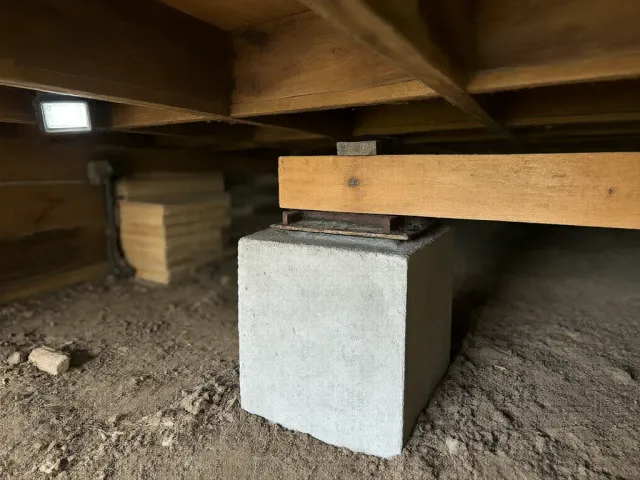
We level crawl-space houses from underneath, jacking each girder a little at a time and setting steel shims. A whole-house re-shim runs $650 to $1,800, and new piers and pads are $350 to $650 each where the old ones have failed.
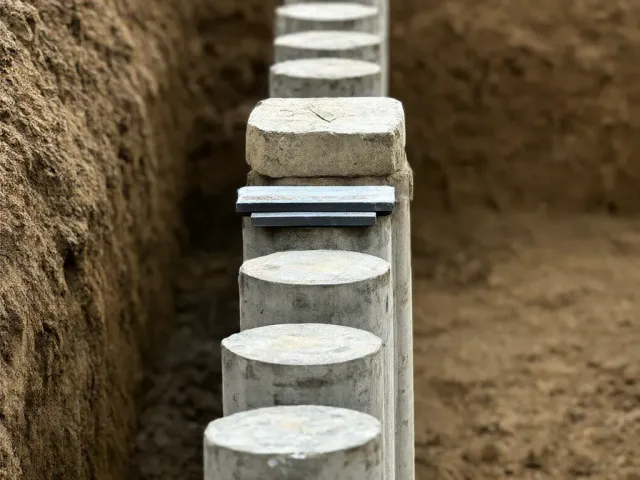
Re-Leveling a Previously Repaired House
A house piered years ago can drift again where no piers were set, or an old pier can lose its shims. We survey against the old pier map, re-shim the sound piers and add new ones only where the readings call for it.
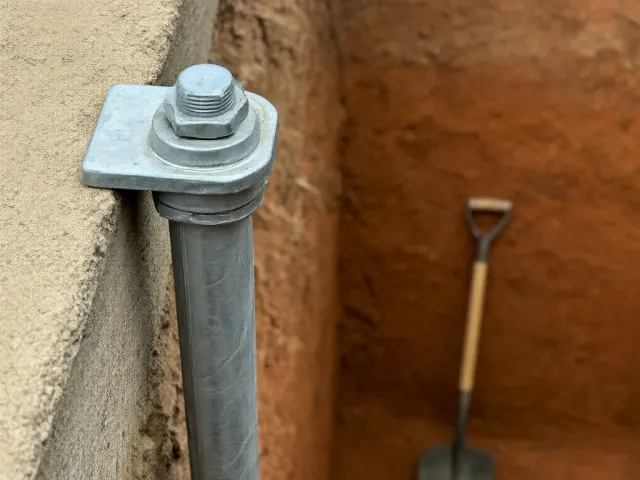
Leveling Additions and Garages
Room additions and garages often sit on a different foundation than the main house and move on their own schedule. We level them back to the main slab with pressed pilings, or with helical piers at $1,500 to $2,400 each where access is tight.
Before and After
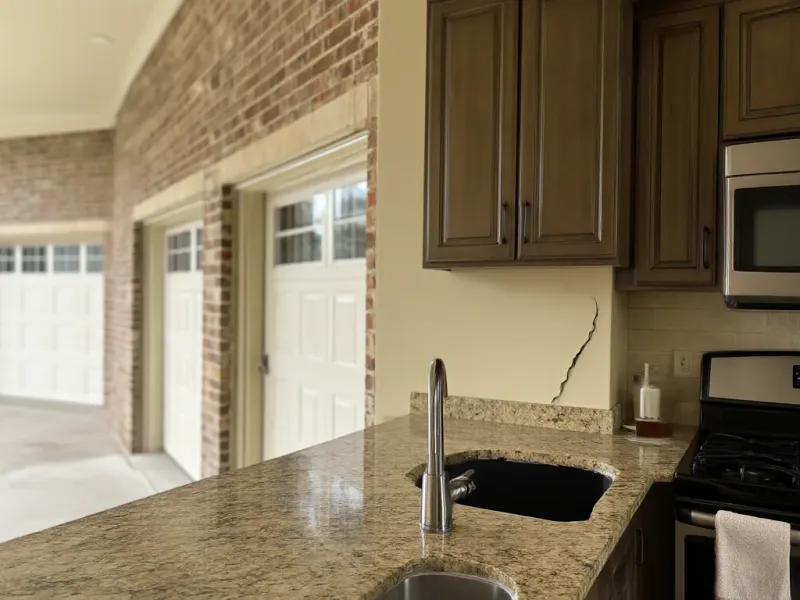
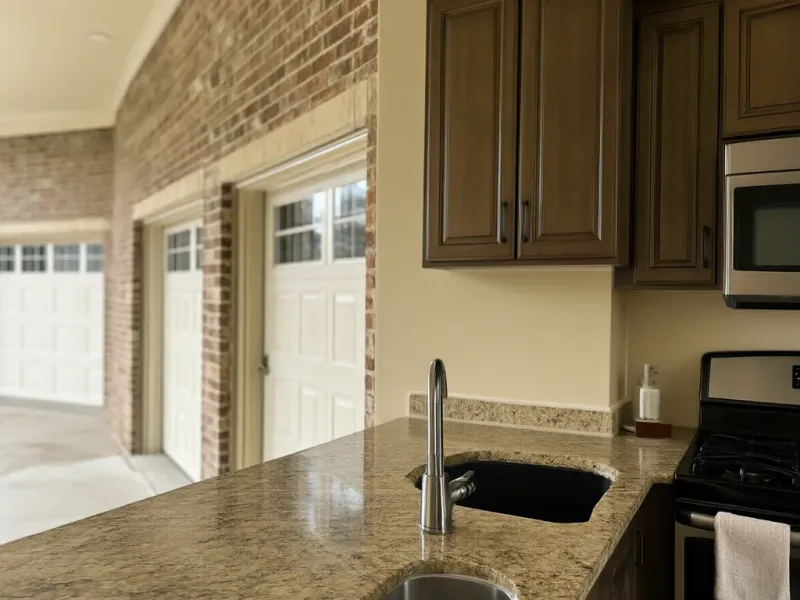
What Level Really Means for an Older Slab
No slab is perfectly flat and houses on clay don't stay level. Engineers use specific guidelines from the Texas Section of the American Society of Civil Engineers to measure how much a foundation slopes or bends. We lift the house to the target set by the engineer, not to a zero reading.
That matters because forcing the last bit of lift is how you crack a kitchen counter or pop a tile floor. A house that's been out of level for years has walls, trim and cabinets that settled with it. We bring it back to where it functions well: doors close, floors feel flat, cracks stop growing.
What Happens Inside the House During a Lift
We lift in stages, a little at each pier, with one person on the manometer calling readings. It's slow on purpose. Drywall, tile and plumbing need time to move with the slab, and a fast lift is how new cracks show up.
You'll hear the ram and the occasional pop as trim adjusts. Doors that stuck may swing freely by the end of the day, and some brick cracks close visibly. Drywall cracks usually need patching after the lift, and we'll tell you which ones to wait on until the house has settled in for a few weeks.
Take pictures off the walls on the low side and clear fragile things from shelves. Keep the cars out of the driveway on lift day. We'll test the drain lines again once the lift is done, because raising a slab can stress an old joint.
Signs Your House Needs Leveling, Not Just a Pier
One sticking door is a pier question. Sticking doors in three rooms, a slope you can feel walking down the hall, and cracks in the brick on two sides of the house are a leveling question. The difference is whether the movement is local or spread across the slab.
The survey settles it. When the low readings are clustered on one side, we pier that side. When they're spread around the perimeter with a high spot in the middle, the house has dished, and leveling it means more pilings around more of the house. We show you the readings either way.
Our House Leveling Process
Map the Whole House
We take 40 to 70 manometer readings room by room and draw an elevation map with the high and low areas marked.
Set a Realistic Target With the Engineer
An independent PE reviews the map, sets pier locations and a lift target within 3 to 5 business days, and we pull the permit.
Test the Drains and Set the Piers
We perform a static test on your drain lines first. Then we dig to set pilings or prepare the crawl space based on your foundation type.
Lift in Stages
We raise the house incrementally across all piers while monitoring the manometer and existing cracks. We lock everything in place using steel shims.
Re-Map, Retest and Hand Over
After the lift, we re-survey the floor and retest the drains. We then give you your after-map, the engineer's final letter, and your warranty.
House Leveling Questions
Can you get my house perfectly level?
Usually not, and we won't try. A house that's been out of level for years has settled into its shape. We lift to the engineer's target so doors work and floors feel flat, without cracking finishes chasing the last fraction.
How long does house leveling take?
Most slab leveling jobs take 1 to 3 days. Larger jobs or those requiring bell-bottom piers take longer because those piers need a 7 to 10 day cure before we start the lift.
Will leveling crack my drywall or tile?
Some drywall cracks might shift or open while others close. A slow lift keeps this damage to a minimum. Tile that is already cracked usually stays that way, and we'll tell you which cracks to patch after the house settles.
Is house leveling different from foundation repair?
It's the same work seen from inside. Foundation repair stabilizes the slab or piers. Leveling is how far we lift it back up while we're there. We price them together because one doesn't happen without the other.
My house was leveled before. Why is it moving again?
Usually because piers were only set on one side and the rest of the slab kept moving, or because a drainage problem was never fixed. Bring the old pier map and warranty to the inspection. If the old company's warranty covers it, use that first.
Find Out How Far Out of Level Your House Is
Call (469) 536-0217 for a free elevation survey within 48 hours. You'll see the full map and get a written leveling estimate the same day.